
ALP500
Description:
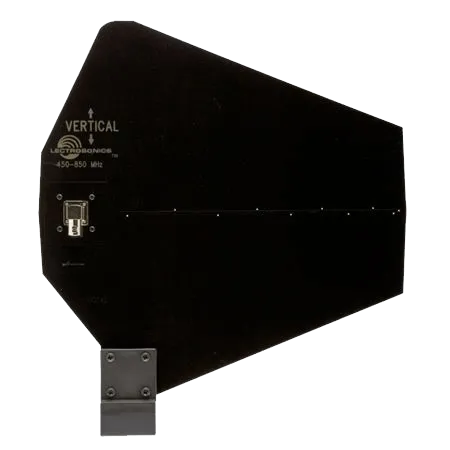
Standard remote antenna ideal for fixed applications. The ALP Series antennas are a Log Periodic Dipole Array (LPDA) design that provides a useful directional pattern over a broad frequency bandwidth.
Compatible Models:
Any receiver/remote antenna in-line systems
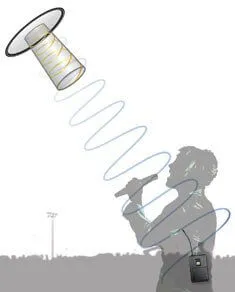
It can be used in a couple of different ways – as an In-Ear Monitor transmitter antenna or with a receiver for wireless microphones.
Typically performing artists wear a receiver that includes a ¼ wave whip antenna. Any movement can result in a lower quality transmission. With the helical antenna, RF energy rotates through 360 degrees of polarization, providing crystal clear reception in the artists’ ear no matter how much they move or where they go on the stage.
The same applies when an artist is using a wireless microphone. A helical antenna can be used with the receiver for greater performance no matter how much the handheld microphone is moved around.

POLARIZATION SOLUTIONS
Typical antennas suffer from polarization. This isn’t so much of a problem under normal circumstances, for example, the large vertical FM antenna tower broadcasting a local radio station is being received by the vertically mounted antenna on your car. The trouble is, in the entertainment and events industry, antenna polarization is becoming a major issue. Larger venues and more RF used for performer microphones, in-ear-monitors (IEMs) and crew communication are causing headaches for audio engineers.
The helical antenna, which eliminates polarization problems, has been around for decades, but was previously used only for military applications and for satellite communications. Helical Antennas are increasingly being utilized in the entertainment and events industry where drop-out free coverage is critical.
During setup and testing, audio engineers typically place a wireless microphone in a stand, with the whip antenna positioned vertically. Using a standard paddle antenna, also positioned vertically, they get a strong signal. The trouble is, no performer is going to stand still and keep the antenna on their microphone or belt pack perfectly vertical. As they move around, they change the polarity of their transmitter or receiver antenna, causing signal dropouts. The helical antenna eliminates these problems. Its circular polarization receives and transmits both vertical and horizontal signals and every angle in between. The result is greater bandwidth and gain and the strongest possible signal.
ENGINEERING DATA SPECIFICATIONS
RF Frequency Range / Bandwidth
460 – 900 MHz
Impedance
50 ohms
Beamwidth
57 degrees
Antenna Gain
14 dBi (on axis)
Front-to-Back Ratio / Rear Rejection
30 dB
DC/AC Power Source
Not required
RF Connector
BNC female, right angle
Dual Mounting Adapter
5/8″-27 U.S. standard
3/8″-16 European standard
Antenna Cable Retainer
Plastic clamp on rear of antenna
Estimated Operating Temperature
-30 degrees F to 180 degrees F
[-34 degrees C to 80 degrees C]
Net Weight
3lbs 11oz (1.7 kg)
Shipping Weight
5lbs (2.3 kg)
Shipping Dimensions
14″ x 14″ x 14″ (36 x 36 x 36 cm)
Construction Material
Clear Polycarbonate plastic
